
Quick Summary
- Who this guide is for: Filipino citizens, OFWs, and foreigners seeking PhilHealth membership or updates.
- Important Notes: Always prepare valid IDs and correct forms before proceeding.
- Estimated Time: 21 minutes for reading and preparation.
PhilHealth Benefits Guide: 10 Coverage Packages, Eligibility, and How to Claim in 2026
Under Republic Act No. 11223, the Universal Health Care Act, every Filipino is entitled to a comprehensive set of PhilHealth benefits designed to reduce the financial burden of illness. From inpatient hospital stays and maternity care to catastrophic Z Benefits for cancer treatment, your membership unlocks a wide range of healthcare coverage. In this guide, I will walk you through every major PhilHealth benefit package, explain eligibility requirements, list the documents you need, and show you exactly how to claim your benefits when you or a dependent needs medical care. Benefit packages, case rates, and policies are subject to change. Always verify current rates and coverage details through the official PhilHealth website at www.philhealth.gov.ph.
What Are PhilHealth Benefits?
PhilHealth benefits are the healthcare coverage entitlements that every registered member receives from the Philippine Health Insurance Corporation. When you or your qualified dependents get sick, injured, or need medical treatment, PhilHealth pays a predetermined portion of the hospital and medical costs directly to the accredited healthcare provider. This payment is called a case rate benefit — a fixed amount deducted from your total bill based on your specific medical condition or procedure.
Your PhilHealth benefits cover a wide spectrum of health services: confinement in accredited hospitals, surgical procedures, emergency care, maternity and newborn services, outpatient consultations, catastrophic illness treatment, and preventive primary care. The benefit amount varies depending on the type of illness, the procedure performed, and the facility where you receive care. Think of your PhilHealth benefits as a financial shield — they do not always cover 100% of your bill, but they significantly reduce what you pay out of pocket.
Who Is Eligible for PhilHealth Benefits?
All registered PhilHealth members with updated contributions can avail of PhilHealth benefits. This includes:
- Employed members (private and government) whose contributions are regularly deducted from salary.
- Self-employed and voluntary members who pay their own premiums.
- Overseas Filipino Workers (OFWs) who have paid their annual contributions.
- Senior citizens who are automatic lifetime members under the Universal Health Care Act.
- Sponsored members and indirect contributors registered through government programs.
- Qualified dependents of all the above members.
Qualified dependents include the member’s legal spouse, children below 21 years old (unmarried and unemployed), and parents over 60 years old who are financially dependent on the member. If you have not yet registered, complete your PhilHealth online registration to start building your eligibility.
Inpatient Hospital Benefits
Inpatient PhilHealth benefits apply when you are admitted to an accredited hospital for at least 24 hours. Covered expenses include room and board, drugs and medicines, laboratory exams, operating room fees, and professional fees of attending physicians. The benefit amount is calculated using PhilHealth case rates — a fixed payment for each specific illness or procedure.
Examples of common inpatient case rates include treatment for pneumonia, dengue fever, acute gastroenteritis, and surgical procedures like appendectomy or cholecystectomy. The case rate amount is automatically deducted from your hospital bill upon discharge, provided you meet the eligibility requirements. Remember that PhilHealth imposes a 45-day annual limit on room and board coverage per member per calendar year.
Outpatient Care Benefits
Not all PhilHealth benefits require confinement. Outpatient care covers day surgeries, radiotherapy, chemotherapy, and selected procedures that do not need overnight hospital stays. These are processed as outpatient case rate deductions. Members also have access to outpatient consultations at accredited PhilHealth Konsulta providers and primary care facilities. The outpatient benefit ensures you receive necessary medical attention without the cost and inconvenience of hospitalization when it is not medically required.
Primary Care and Konsulta Benefits
Under the Universal Health Care Act, PhilHealth benefits now emphasize preventive and primary care. Every member is encouraged to register with a PhilHealth-accredited Konsulta provider — a public or private clinic that serves as your first point of contact for health concerns. Primary care benefits include regular health check-ups, vaccinations, health risk assessments, laboratory tests, and prescribed medications dispensed at the clinic level. These services are packaged under the Konsultasyong Sulit at Tama program and are designed to catch health problems early before they require expensive hospital treatment.
Emergency Care Coverage
PhilHealth covers emergency medical treatment even if you are treated in a non-accredited facility, provided the emergency is life-threatening and the nearest available hospital was used. Emergency PhilHealth benefits cover initial stabilization, necessary diagnostic procedures, and urgent medical interventions. After stabilization, you may be transferred to an accredited hospital for continued care. This benefit ensures that no member is denied treatment during critical moments due to facility accreditation status.
Maternity and Newborn Care Benefits
PhilHealth provides comprehensive maternity PhilHealth benefits covering prenatal care, normal spontaneous delivery, cesarean section, miscarriage management, and postpartum care. The maternity package includes a fixed case rate that covers delivery room fees, professional fees, and basic medications. Newborn care benefits include newborn screening, hearing tests, and essential neonatal interventions.
To qualify, a female member must have at least three months of contributions within the six-month period immediately before delivery. The maternity benefit applies regardless of whether the member is employed, self-employed, a voluntary contributor, or a qualified dependent spouse of a male member.
Hemodialysis Benefits
For members with chronic kidney disease stage 5, PhilHealth benefits now cover up to 156 hemodialysis sessions per year — a substantial increase from previous limits. Each session is deducted at the accredited dialysis center’s billing counter. This benefit is a lifeline for patients requiring regular dialysis to survive. Members must be registered with a PhilHealth-accredited dialysis facility and maintain updated contributions to continue accessing this benefit uninterrupted.
Cancer and Z Benefits Package
The PhilHealth Z Benefits package addresses catastrophic health conditions that require prolonged and expensive treatment. Covered conditions include specific types of cancer — breast, prostate, cervical, colorectal, and childhood acute lymphocytic leukemia — as well as coronary artery bypass graft surgery, kidney transplantation, and other high-cost interventions. Z PhilHealth benefits provide more substantial financial coverage than standard case rates, sometimes covering the majority of treatment costs. Patients must meet specific clinical criteria and receive care at PhilHealth-accredited Z Benefit contracted hospitals to qualify for these enhanced packages.
Mental Health Coverage
Recognizing the importance of psychological well-being, PhilHealth benefits now include mental health services. Members can access psychiatric consultations, psychological counseling, and inpatient psychiatric care at accredited facilities. The mental health package was expanded under the Mental Health Act and the Universal Health Care Act to ensure that Filipinos suffering from depression, anxiety, and other mental health conditions receive professional care without devastating financial consequences.
TB DOTS and HIV/AIDS Treatment Packages
PhilHealth provides specific outpatient benefit packages for tuberculosis treatment under the Directly Observed Treatment Short-course (DOTS) strategy. TB patients receive free anti-TB medications and regular monitoring at accredited DOTS facilities. For HIV/AIDS, PhilHealth covers antiretroviral therapy, laboratory monitoring, and treatment of opportunistic infections. These PhilHealth benefits ensure that patients with communicable diseases receive continuous, stigma-free care through dedicated treatment hubs across the Philippines.
Senior Citizen PhilHealth Benefits
Under Republic Act No. 11223, all senior citizens are automatically covered as lifetime PhilHealth members without needing to pay further contributions if they are not currently employed. Senior PhilHealth benefits include all standard inpatient and outpatient packages, plus additional discounts mandated by the Expanded Senior Citizens Act. When admitted, senior citizens benefit from both the PhilHealth case rate deduction and the mandatory 20% senior citizen discount, significantly lowering their hospital bills. Ensure your senior family member’s Member Data Record (PhilHealth MDR) is updated to reflect their lifetime member status.
OFW PhilHealth Benefits
Overseas Filipino Workers enjoy the same comprehensive PhilHealth benefits as locally employed members, as long as their annual premium contributions are paid. OFWs can claim benefits for themselves and their qualified dependents in the Philippines. The benefit packages cover hospitalization, surgery, maternity care (for female OFWs or spouses of male OFWs), and all other standard PhilHealth packages. OFWs should regularly check their contribution status through the PhilHealth Member Portal and download updated MDRs to share with family members who may need to facilitate hospital claims while the OFW is abroad.
Self-Employed and Voluntary Member Benefits
Self-employed individuals, freelancers, and voluntary members who pay their own PhilHealth contributions are entitled to the full range of PhilHealth benefits — identical to those of formally employed members. The key is maintaining regular payments. Since no employer deducts contributions automatically, voluntary members must be disciplined about quarterly or annual payments. Missing payments can result in a lapse in eligibility, precisely when coverage is most needed. Use the PhilHealth contribution payment options available online to stay updated effortlessly.
Benefit Eligibility Requirements
To successfully claim your PhilHealth benefits, you must meet these core requirements:
- Updated contributions: At least three months of premium payments within the six-month period immediately before the month of confinement or availment.
- Active membership status: Your PhilHealth record must show “Active” and not “Inactive” or “Delisted.”
- 45-day limit compliance: You have not exhausted the annual 45-day room and board benefit limit for the current calendar year.
- Accredited facility: The hospital or clinic where you seek treatment is PhilHealth-accredited (except for true emergencies).
- Attending physician accreditation: Your doctor must also be a PhilHealth-accredited physician.
Documents Required to Claim PhilHealth Benefits
Prepare these documents before filing a claim for your PhilHealth benefits:
- PhilHealth ID card or a printed copy of your Member Data Record (MDR).
- Valid government-issued identification (UMID, passport, driver’s license, national ID).
- Duly accomplished PhilHealth Claim Form (provided by the hospital).
- If claiming for a dependent, proof of relationship (marriage certificate for spouse, birth certificate for children).
- For senior citizens, Senior Citizen ID or OSCA ID.
How to Claim PhilHealth Benefits (Step-by-Step)
Step 1: Inform the Hospital Admissions Desk
When you or your dependent is admitted to an accredited hospital, immediately inform the billing or admissions officer that you are a PhilHealth member. Declare your intention to avail of PhilHealth benefits upon admission, not upon discharge. This early notification triggers the hospital’s internal PhilHealth processing workflow.
Step 2: Present Your PhilHealth Documents
Show your PhilHealth ID card or a recent printout of your Member Data Record. Also present one valid government ID. The hospital staff will verify your identity and membership status against PhilHealth’s database through the online eligibility verification system.
Step 3: Sign the Required Claim Forms
The hospital billing section will provide PhilHealth Claim Forms that need your signature. Read the documents carefully before signing. These forms authorize the hospital to apply your PhilHealth case rate deduction directly to your bill.
Step 4: Receive the Benefit Deduction
Upon discharge, the hospital computes your total bill and automatically subtracts the applicable PhilHealth case rate benefit. You pay only the remaining balance. Review the final billing statement to ensure the PhilHealth deduction is correctly reflected.
5 Common Claim Mistakes That Reduce Your PhilHealth Benefits
- Not updating contributions: Members forget to pay premiums voluntarily after leaving employment, causing inactive status.
- Declaring membership only at discharge: Late notification can result in the claim being denied because processing was not initiated upon admission.
- Exceeding the 45-day annual limit: Multiple confinements in one year can exhaust your room and board benefit.
- Using non-accredited facilities for non-emergencies: Elective procedures at non-accredited hospitals are not covered.
- Not updating dependent records: Unregistered dependents cannot claim benefits even if the principal member is active.
10 Tips to Maximize Your PhilHealth Benefits
- Keep your contributions updated — at least three months within the last six months.
- Register all qualified dependents immediately after life events (marriage, childbirth).
- Download a fresh MDR quarterly from the PhilHealth Member Portal.
- Choose PhilHealth-accredited hospitals and physicians whenever possible.
- Register with a Konsulta primary care provider for free preventive check-ups.
- Know the case rates for common procedures so you understand your potential deduction.
- Keep digital and printed copies of your PhilHealth ID and MDR at all times.
- Track your 45-day annual limit to avoid surprises during subsequent confinements.
- For OFWs, ensure your family in the Philippines has access to your updated MDR.
- If a claim is denied, ask for the specific reason and file an appeal with supporting documents.
PhilHealth Benefits Package Comparison Table
| Benefit Package | Coverage Type | Key Requirements | Where to Avail |
|---|---|---|---|
| Inpatient Hospital Care | Case rate deduction | 3 months contributions, accredited hospital | Accredited hospitals |
| Outpatient Day Surgery | Case rate deduction | 3 months contributions, accredited facility | Accredited clinics/hospitals |
| Maternity & Newborn Care | Fixed package rate | 3 months in 6 months before delivery | Accredited birthing facilities |
| Hemodialysis | Per session deduction | Up to 156 sessions/year, accredited center | Accredited dialysis centers |
| Z Benefits (Cancer, etc.) | Enhanced package | Clinical criteria, Z contracted hospital | Z Benefit contracted hospitals |
| Primary Care (Konsulta) | Free consultations | Registered with Konsulta provider | Accredited Konsulta clinics |
Frequently Asked Questions About PhilHealth Benefits
What is the 45-day PhilHealth benefit limit?
PhilHealth covers up to 45 days of room and board per member per calendar year for hospital confinements. Once this limit is reached, room and board charges are no longer covered for that year, though other components like drugs and professional fees may still be deducted. The limit resets every January 1.
Can I claim PhilHealth benefits if I just started paying contributions?
You need at least three months of contributions within the six months immediately before your confinement. If you are a new member with only one or two months of payments, your claim may be denied. Complete your PhilHealth online registration and pay consistently to build eligibility.
Are dependents covered by PhilHealth benefits?
Yes. Legitimate spouse, children under 21 (unmarried and unemployed), and parents over 60 who depend on the member for support are covered. They share the same 45-day annual room and board limit as the principal member. Ensure dependents are properly registered and listed on your MDR.
Does PhilHealth cover dental procedures?
Basic dental extractions performed in accredited facilities may be covered under outpatient benefits. However, cosmetic dentistry, orthodontic treatments like braces, and most dental prosthetics are not included in standard PhilHealth benefits.
How much does PhilHealth deduct for a normal delivery?
PhilHealth provides a fixed case rate deduction for normal spontaneous delivery in accredited birthing facilities and hospitals. The exact amount is set by PhilHealth circulars and may vary by facility level. Visit the official PhilHealth website for current maternity case rates.
Can I claim PhilHealth benefits for pre-existing conditions?
Yes. Unlike private health insurance, PhilHealth does not exclude pre-existing conditions. As long as you meet the contribution requirements and receive care at an accredited facility, you can claim benefits for any covered illness regardless of when it was first diagnosed.
What happens if I exceed the 45-day limit?
If you exceed 45 days of room and board in one calendar year, PhilHealth will still cover other components of your hospital bill like drugs, medicines, laboratory tests, and professional fees. Only the room and board portion is subject to the annual limit.
Are OFW dependents eligible for PhilHealth benefits?
Yes, qualified dependents of OFWs are fully entitled to PhilHealth benefits as long as the OFW member’s annual contributions are paid. OFWs should ensure their family has a copy of their updated MDR for hospital admissions.
Can I claim benefits at any hospital?
You can claim PhilHealth benefits at any PhilHealth-accredited hospital. For true medical emergencies, PhilHealth covers treatment even at non-accredited facilities if it was the nearest available hospital. Elective procedures must be done at accredited institutions.
Key Takeaways About Your PhilHealth Benefits
- PhilHealth benefits cover inpatient, outpatient, maternity, dialysis, cancer Z Benefits, mental health, TB DOTS, and primary care services at accredited facilities.
- You need at least three months of updated contributions within six months before confinement to qualify for most PhilHealth benefits.
- Qualified dependents — spouse, children under 21, and elderly parents — share the same coverage as the principal member.
- Always present your PhilHealth ID or MDR upon hospital admission, not at discharge, to ensure the benefit deduction is processed correctly.
- Benefit packages, case rate amounts, and policies are updated periodically. Verify current details through the official PhilHealth website at www.philhealth.gov.ph.
Image Recommendations for This Article
- Filename: philhealth-benefits-coverage-packages-overview.jpg
ALT: Overview of PhilHealth benefits showing inpatient, outpatient, maternity, and Z Benefits coverage packages.
Title: PhilHealth Benefits Coverage Packages
Caption: Complete overview of PhilHealth benefits available to all registered members. - Filename: philhealth-maternity-benefits-mother-newborn.jpg
ALT: Mother and newborn baby representing PhilHealth maternity and newborn care benefits.
Title: PhilHealth Maternity Benefits
Caption: PhilHealth covers normal delivery, cesarean section, and newborn care. - Filename: philhealth-hemodialysis-patient-treatment.jpg
ALT: Patient receiving hemodialysis treatment covered by PhilHealth benefits.
Title: PhilHealth Hemodialysis Coverage
Caption: Up to 156 hemodialysis sessions per year are covered by PhilHealth. - Filename: philhealth-z-benefits-cancer-treatment.jpg
ALT: Cancer patient receiving treatment under PhilHealth Z Benefits package.
Title: PhilHealth Z Benefits for Cancer
Caption: Z Benefits provide enhanced coverage for catastrophic illnesses including cancer. - Filename: how-to-claim-philhealth-benefits-hospital.jpg
ALT: Patient presenting PhilHealth ID and MDR at hospital admissions desk to claim benefits.
Title: Claiming PhilHealth Benefits at Hospital
Caption: Present your PhilHealth documents upon admission to claim your benefits.
Disclaimer
This website (philhealth-portal.ph) is an independent informational resource and is not affiliated with PhilHealth, the Philippine Health Insurance Corporation, or the Philippine Government. Benefit packages, case rate amounts, eligibility criteria, and claiming procedures are subject to change. This guide reflects general policies and may not capture the most recent PhilHealth circulars. Always verify current PhilHealth benefits, rates, and requirements through the official PhilHealth website at www.philhealth.gov.ph or by visiting the nearest PhilHealth branch.
Need More Help?
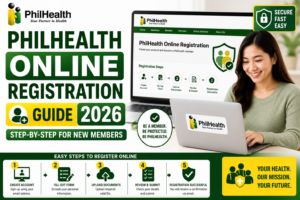
Explore our comprehensive PhilHealth Online Registration Guide for step-by-step instructions.
View Registration Guide →