
Quick Summary
- Who this guide is for: Filipino citizens, OFWs, and foreigners seeking PhilHealth membership or updates.
- Important Notes: Always prepare valid IDs and correct forms before proceeding.
- Estimated Time: 29 minutes for reading and preparation.
PhilHealth Employers Guide 2026: Complete Registration, Contributions, Remittance & Compliance
What Is PhilHealth Employer Registration?
PhilHealth employer registration is the formal process by which a business entity or organization that hires workers enrolls with the Philippine Health Insurance Corporation as a recognized employer. This registration creates a unique PhilHealth Employer Number that identifies the business in the PhilHealth system. Once registered, the employer becomes legally responsible for deducting employee PhilHealth contributions from salaries, adding the employer’s counterpart share, and remitting the total amount to PhilHealth on a regular schedule. Employer registration is not a one-time event — it is the foundation of an ongoing compliance relationship that includes monthly contribution remittances, employee enrollment, record updates, and periodic reporting. Every legally operating business in the Philippines with at least one employee must complete this registration.
Who Is Required to Register as a PhilHealth Employer?
The obligation to register as a PhilHealth employer applies broadly. All private companies — corporations, partnerships, and sole proprietorships — must register regardless of the number of employees. Government agencies and instrumentalities are similarly required. Non-government organizations, cooperatives with paid staff, and household employers of kasambahay (domestic workers) must also register. Even foreign corporations doing business in the Philippines and employing Filipino workers fall under this mandate. The trigger for registration is simple: the moment you hire your first employee, you become a PhilHealth employer. There is no minimum employee threshold. A small retail store with one sales clerk, a startup with a single developer, a family that employs a household worker — all are required to register. This obligation exists alongside SSS and Pag-IBIG employer registration as part of the trifecta of statutory employee benefits in the Philippines.
Employer Responsibilities Under PhilHealth
Being a registered PhilHealth employer carries specific, legally enforceable responsibilities. The core obligations include: registering the business and obtaining a PhilHealth Employer Number; enrolling all employees — both new hires and existing workers — in PhilHealth; accurately computing monthly contributions based on each employee’s salary bracket; deducting the employee’s share from their salary; adding the employer’s counterpart share; remitting the total contribution on or before the prescribed deadline each month; maintaining accurate payroll and contribution records for all employees; reporting newly hired employees within the required timeframe; updating employee records when information changes; reporting separated or resigned employees; and cooperating with PhilHealth audits and compliance verification. These responsibilities continue for as long as the business employs workers. Even if the business temporarily has no employees, the employer record remains active for future hiring.
Employer Obligations Under the Universal Health Care Act
Republic Act No. 11223 reinforced and expanded employer obligations. The law mandates that all Filipinos be covered by the National Health Insurance Program, and employers are the primary vehicle for enrolling and contributing on behalf of the employed sector. Under the Universal Health Care Act, employers must ensure that every employee, regardless of employment status — regular, probationary, contractual, project-based, or seasonal — is registered with PhilHealth. The law also requires employers to remit contributions accurately and on time, as non-remittance directly harms employees by rendering them ineligible for PhilHealth benefits during medical emergencies. The Universal Health Care Act strengthened enforcement mechanisms, giving PhilHealth greater authority to audit employers, impose penalties, and pursue legal action against non-compliant businesses. Employers who deduct contributions from salaries but fail to remit them commit a serious violation with both civil and criminal implications.
Benefits of Full Employer PhilHealth Compliance
Beyond avoiding penalties, full compliance with PhilHealth employers obligations delivers tangible benefits. Compliant employers protect their workforce — employees with active PhilHealth coverage can access hospital benefits, reducing their out-of-pocket medical expenses and minimizing productivity losses from untreated illnesses. Compliance also shields the business from legal exposure. Employees cannot file complaints for non-remittance if contributions are properly paid. During government audits or labor inspections, updated PhilHealth records demonstrate good corporate citizenship. Additionally, many government permits, clearances, and bidding opportunities require proof of statutory compliance including PhilHealth. A business with clean PhilHealth records is better positioned when applying for government contracts, loans, or accreditations. Perhaps most importantly, compliance builds trust with employees — workers who see their contributions properly remitted feel secure and valued, contributing to higher morale and retention.
Employer Eligibility and Business Registration Requirements
To register as a PhilHealth employer, a business must be a legally recognized entity in the Philippines. The specific registration documents vary by business structure. Sole proprietorships need a Department of Trade and Industry registration. Corporations and partnerships need Securities and Exchange Commission registration. All businesses need a valid business permit from the local government unit where they operate and a Bureau of Internal Revenue Certificate of Registration. Government agencies need their enabling legislation or charter documents. Non-government organizations need their SEC registration and accreditation papers. The business must have a physical address and an authorized representative — typically the owner, managing partner, or a designated officer — who will sign documents and be the point of contact for PhilHealth correspondence.
Documents Required for PhilHealth Employer Registration
| Business Type | Required Documents |
|---|---|
| Sole Proprietorship | DTI Certificate, Business Permit, BIR Certificate of Registration, Owner’s Valid ID |
| Corporation / Partnership | SEC Registration, Business Permit, BIR Certificate of Registration, Authorized Representative’s Valid ID |
| Government Agency | Enabling Law or Charter, Agency Head’s Appointment Papers, Valid ID |
| NGO / Cooperative | SEC or CDA Registration, Business Permit, BIR Certificate, Authorized Representative’s Valid ID |
| Household Employer (Kasambahay) | Employer’s Valid ID, Kasambahay Employment Contract |
How to Register as a PhilHealth Employer
Step 1: Gather Business Registration Documents
Prepare your DTI or SEC registration, business permit, BIR Certificate of Registration, and the valid ID of the business owner or authorized representative. Ensure all documents are current and not expired.
Step 2: Complete the Employer Registration Form
Download the PhilHealth Employer Registration Form from the official PhilHealth website or obtain it at any PhilHealth branch. Fill out all required fields accurately, including the business name, address, nature of business, and authorized representative details.
Step 3: Submit to the Appropriate PhilHealth Branch
Submit the completed form and supporting documents to the PhilHealth branch or local health insurance office that has jurisdiction over your business address. Bring original documents and photocopies for verification.
Step 4: Receive Your PhilHealth Employer Number
Once processed, PhilHealth will issue a unique PhilHealth Employer Number. This number is used for all future transactions — contribution remittances, employee enrollment, reporting, and correspondence with PhilHealth. Keep this number secure and accessible to your payroll and HR staff.
Online PhilHealth Employer Registration Process
PhilHealth has introduced online employer registration through its digital platforms. Employers can visit the official PhilHealth website, navigate to the employer section, and complete the registration form digitally. Scanned copies of the required business documents are uploaded. An active email address is necessary for account verification and ongoing communication. The online system allows employers to initiate registration without visiting a branch, though some cases may require in-person validation of original documents. Once approved online, the employer receives their Employer Number via email. The online employer portal, once fully activated, also enables electronic contribution remittance, employee enrollment, and report submission — significantly streamlining compliance for businesses. Check the official PhilHealth website for the latest online employer registration procedures and portal availability.
PhilHealth Employer Number Explained
The PhilHealth Employer Number is a unique identifier assigned to each registered employer. It is distinct from the employer’s SSS number or Pag-IBIG employer number. This number must be used on all contribution remittance forms, employee enrollment documents, and correspondence with PhilHealth. The Employer Number links all employee records to the business, allowing PhilHealth to track which employer is responsible for which members’ contributions. When an employee moves from one company to another, their PhilHealth PIN remains the same, but the employer associated with their contributions changes. HR and payroll departments should securely store the Employer Number and include it in their standard operating procedures for statutory deductions. Losing or misplacing the Employer Number can delay remittances and reporting.
How to Enroll New Employees in PhilHealth
When a new employee joins your company, you must ensure their PhilHealth membership is properly enrolled under your employer account. First, ask the new hire if they already have a PhilHealth Identification Number (PIN) from previous employment. If they do, simply report the employee under your employer number — no new registration is needed. The employee’s contribution history continues seamlessly. If the new hire does not have a PIN, you must facilitate their initial registration by having them complete a PhilHealth Member Registration Form (PMRF). Submit the PMRF to PhilHealth along with a copy of the employee’s valid ID. Once processed, PhilHealth issues a PIN for the employee. All new employees must be reported within 30 calendar days from the start of their employment. Delayed enrollment can result in the employee being unable to claim PhilHealth benefits if a medical need arises.
How to Report Newly Hired Employees to PhilHealth
Reporting newly hired employees to PhilHealth is a distinct process from initial registration. For employees who already have a PIN, the employer must submit a membership update or employee report form indicating that the employee is now under their employ. This can be done through the employer portal, if available, or by submitting the appropriate form at a PhilHealth branch. The report typically requires the employee’s full name, PhilHealth PIN, date of hire, position, and monthly basic salary. This reporting ensures that future contribution remittances are correctly attributed to the employee’s record. Failure to report new hires means that even if contributions are remitted, they may not be properly posted to the employee’s membership history, causing claim denials during hospitalizations.
How to Update Employee Records with PhilHealth
Employee circumstances change — they get married, have children, change addresses, or update their names. Employers should facilitate the updating of these records with PhilHealth by submitting the appropriate membership update forms with supporting documents. For civil status changes, a marriage certificate is required. For adding dependents, birth certificates are needed. For name corrections, the employee’s updated valid ID and birth certificate must be submitted. While employees can update their own records through the PhilHealth Member Portal, employers often act as the intermediary, especially for rank-and-file employees who may not have easy internet access. Updated employee records ensure that when claims are filed, the member’s information matches PhilHealth’s database, preventing claim rejections.
Employee PhilHealth Membership Requirements
Every employee, regardless of employment type, must be a PhilHealth member. The basic PhilHealth requirements for employees include a completed PMRF for first-time registrants, a valid government-issued ID, and employment information provided by the employer. Employers should not assume that employees are already registered — verify with each new hire whether they have a PIN. For employees who are transferring from another company, request a copy of their previous Member Data Record (MDR) to confirm their status and ensure a smooth transition. The employer is responsible for deducting the employee’s share of the contribution from their salary and remitting it together with the employer’s share.
Managing Employee Dependents in PhilHealth Records
Employees can declare qualified dependents who are then covered under their PhilHealth membership. Employers should inform employees of their right to declare dependents and assist with the documentation. Qualified dependents include the legal spouse (if not employed), children below 21 years old who are unmarried and unemployed, and parents over 60 who are financially dependent on the employee. To add dependents, the employee must submit a membership update form with the required proof of relationship — marriage certificate for spouse, birth certificate for children. Employers can facilitate the submission of these forms to PhilHealth. Accurate dependent records are critical because when a dependent is hospitalized, the PhilHealth benefit is claimed under the employee’s membership, and the dependent must appear on the employee’s MDR.
PhilHealth Contribution Sharing: Employer vs Employee Share
Under the Universal Health Care Act, the total PhilHealth premium is shared equally between the employer and the employee. The prevailing premium rate is applied to the employee’s monthly basic salary within the salary floor and ceiling. The employer pays 50% of the total premium, and the employee pays the other 50% through salary deduction. For example, if the total monthly premium for an employee is ₱1,500, the employer contributes ₱750 and deducts ₱750 from the employee’s salary. The employer remits the full ₱1,500 to PhilHealth. This equal sharing applies to all private and government employees. The kasambahay contribution sharing follows a different, more worker-friendly ratio where the household employer shoulders a larger portion of the premium. For exact rates and sharing ratios, consult the official PhilHealth Contribution Table.
PhilHealth Contribution Computation Examples
| Monthly Basic Salary | Total Premium (5%) | Employer Share (2.5%) | Employee Share (2.5%) |
|---|---|---|---|
| ₱12,000 | ₱600 | ₱300 | ₱300 |
| ₱25,000 | ₱1,250 | ₱625 | ₱625 |
| ₱50,000 | ₱2,500 | ₱1,250 | ₱1,250 |
| ₱80,000 | ₱4,000 | ₱2,000 | ₱2,000 |
Note: Salaries below the floor are computed using the floor amount. Salaries above the ceiling are capped at the ceiling amount. Use the latest PhilHealth Contribution Table for exact current rates.
Salary Brackets and Premium Rates for Employers
PhilHealth contributions are computed based on the employee’s monthly basic salary, subject to a salary floor and ceiling. The salary floor ensures a minimum contribution amount — if an employee earns less than the floor, the contribution is computed as if they earn the floor amount. The salary ceiling caps the maximum contribution — if an employee earns more than the ceiling, the contribution is computed using the ceiling amount. The premium rate is applied uniformly across these brackets. Employers must stay updated on the current floor, ceiling, and premium rate, as these are periodically adjusted through PhilHealth circulars. Using outdated rates results in under-remittance or over-deduction, both of which create compliance issues and potential employee grievances. The official PhilHealth Contribution Table should be consulted for every payroll period.
PhilHealth Contribution Remittance Schedule and Deadlines
Employers must remit PhilHealth contributions according to a prescribed schedule based on the first letter of the employer’s business name. PhilHealth assigns specific due dates throughout each month to stagger the volume of remittances. Employers must know their assigned deadline and strictly adhere to it. Remittances made after the due date are subject to penalties and interest. The remittance schedule is published by PhilHealth and may be updated annually. Employers can check their specific deadline through the official PhilHealth website, at their servicing branch, or through the employer portal. It is the payroll or HR department’s responsibility to calendar these deadlines and ensure timely processing. Many employers set internal deadlines several days before the actual PhilHealth due date to allow for payment processing and avoid last-minute issues.
Accepted Payment Methods for Employer PhilHealth Remittances
| Payment Method | How It Works |
|---|---|
| PhilHealth Branch Over-the-Counter | Submit remittance form and payment at a PhilHealth branch |
| Accredited Banks | Pay at PhilHealth-accredited bank branches nationwide |
| Online Banking | Pay through accredited bank online platforms using PhilHealth as biller |
| Employer Portal (if available) | Remit electronically through PhilHealth’s employer digital platform |
Online Contribution Payment for Employers
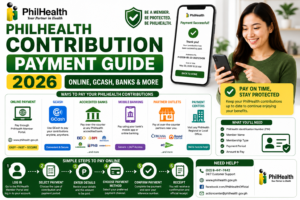
PhilHealth has expanded digital payment options for PhilHealth employers. Through the employer portal or accredited bank online platforms, businesses can remit contributions without visiting a branch. The employer generates a Statement of Premium Account or remittance advice, then pays via integrated online banking, GCash, Maya, or other digital payment channels. Online payment provides the advantage of immediate transaction confirmation and a digital receipt. Employers using online payment should still maintain organized records of all transactions for audit purposes. The exact steps and available platforms depend on current PhilHealth partnerships with financial institutions. Check the official PhilHealth website for the latest list of accredited online payment channels for employer remittances.
Statement of Premium Account (SPA) for Employers
The Statement of Premium Account (SPA) is a billing document generated by PhilHealth that shows the exact amount an employer needs to remit for a given period. Employers can generate an SPA through the employer portal or request it at a PhilHealth branch. The SPA itemizes the employees covered, their respective salary brackets, the total premium due, and the breakdown between employer and employee shares. Using the SPA ensures accurate remittance and serves as an official reference document for internal payroll reconciliation. Employers should generate an SPA for every remittance period and keep copies for their records. The SPA is also useful during audits to demonstrate that contributions were correctly computed and paid.
Electronic Premium Reporting System (EPRS) Overview
PhilHealth has implemented electronic reporting systems to streamline employer compliance. The Electronic Premium Reporting System or equivalent employer portal allows businesses to submit contribution reports, enroll employees, and process remittances digitally. Through this system, employers can upload bulk employee data, generate contribution schedules, and receive electronic confirmation of submissions. The EPRS reduces paperwork and minimizes errors compared to manual form submission. Employers should inquire at their servicing PhilHealth branch about access to the electronic reporting system and any required training or enrollment. As PhilHealth continues its digital transformation, electronic reporting is becoming the standard for employer transactions.
Employee Separation and Reporting Requirements
When an employee resigns, is terminated, or otherwise separates from the company, the employer has reporting obligations to PhilHealth. The employer must submit an employee separation report indicating the employee’s last day of employment and final contribution period. This report signals PhilHealth to stop expecting contributions under that employer’s account for that employee. Failure to report separations can result in the employee’s record showing gaps or incorrect employer associations, potentially affecting future benefit claims. The separation report is typically submitted along with the final month’s contribution remittance for that employee. For employees transferring to another company, the smooth transition of their PhilHealth records depends on proper separation reporting by the previous employer and proper new hire reporting by the new employer.
Late Payments, Penalties, and Interest for Employers
Remitting PhilHealth contributions past the prescribed deadline triggers financial penalties. PhilHealth imposes interest charges on overdue contributions computed from the due date until actual payment. Repeated or prolonged non-remittance can result in more severe sanctions, including legal action. The most damaging consequence of late payment is not financial — it is the impact on employees. If contributions are not posted on time, employees and their dependents become ineligible for PhilHealth benefits. An employee needing hospitalization during a period of employer non-remittance will have their claim denied, potentially leading to employee lawsuits against the employer. Employers must treat contribution deadlines with the same seriousness as tax deadlines. Penalties and interest rates are set by PhilHealth circulars and are subject to change.
Common Employer PhilHealth Compliance Mistakes to Avoid
- Not registering as an employer at all: Operating without employer registration is a violation regardless of company size.
- Deducting from salaries but not remitting: This is the most serious violation and can lead to criminal charges.
- Using outdated contribution rates: Applying old premium rates results in underpayment and employee under-coverage.
- Failing to report new hires: Unreported employees have contributions posted but not properly attributed to their records.
- Incorrect salary bracket computation: Misclassifying employee salaries leads to wrong contribution amounts.
- Missing remittance deadlines: Chronic late payments accumulate penalties and damage employee trust.
Payroll Best Practices for PhilHealth Compliance
- Maintain an updated employee master list with accurate salary data and PhilHealth PINs.
- Set calendar reminders for PhilHealth remittance deadlines based on your assigned schedule.
- Cross-check each payroll run against the official PhilHealth Contribution Table.
- Generate and retain a Statement of Premium Account for every remittance period.
- Conduct quarterly internal audits comparing payroll deductions against actual remittances and PhilHealth posting records.
- Designate a specific payroll or HR staff member responsible for PhilHealth compliance and provide ongoing training.
Record Keeping Requirements for PhilHealth Employers
PhilHealth employers are required to maintain accurate and complete records of all contribution remittances, employee enrollment forms, and membership updates. These records must be kept for a minimum period as prescribed by PhilHealth regulations and general labor laws. Records should include copies of remittance forms, official receipts, SPA documents, employee PMRFs, membership update forms with supporting documents, and separation reports. Organized record keeping is essential for responding to PhilHealth audits, resolving employee contribution disputes, and demonstrating compliance during government inspections. Digital copies of all records are recommended as backup, but original documents should be preserved in a secure, organized filing system accessible to authorized HR and payroll personnel.
PhilHealth Audits and Compliance Checks for Employers
PhilHealth has the authority to conduct employer audits to verify compliance with registration, contribution, and reporting obligations. An audit may be triggered by employee complaints, random selection, or discrepancies identified in submitted reports. During an audit, PhilHealth examiners review payroll records, contribution remittance receipts, employee lists, and supporting documents. Employers found non-compliant may be assessed unpaid contributions plus penalties and interest. The best preparation for an audit is consistent, accurate compliance — maintaining organized records, remitting on time, and promptly addressing any discrepancies. If notified of an audit, employers should cooperate fully and provide all requested documentation. Legal counsel experienced in labor and statutory benefits law should be consulted if significant compliance gaps are identified.
PhilHealth Employers Reference Tables
Employer Transaction Checklist
| Transaction | When Required | Key Form or Action |
|---|---|---|
| Initial Employer Registration | Before hiring first employee | Employer Registration Form + business docs |
| New Employee Enrollment | Within 30 days of hire | PMRF or employee report form |
| Monthly Contribution Remittance | Per assigned monthly deadline | Remittance form + payment |
| Employee Separation Report | Upon employee exit | Separation report form |
Frequently Asked Questions About PhilHealth Employers
Is PhilHealth employer registration mandatory for businesses with only one employee?
Yes. There is no minimum employee threshold for PhilHealth employers registration. The moment a business hires its first employee — even a single worker — the employer must register with PhilHealth, enroll the employee, and begin remitting monthly contributions. This applies to all business types including small sole proprietorships, home-based businesses, and household employers of kasambahay.
What happens if I deduct PhilHealth from employee salaries but don’t remit to PhilHealth?
This is a serious legal violation. Deducting contributions from salaries without remitting them constitutes a form of estafa or misappropriation. Employees who need to claim PhilHealth benefits will be denied because no contributions were posted. The employer faces criminal liability, penalties, interest on unpaid amounts, and potential civil lawsuits from affected employees. Never deduct without remitting.
How do I know my assigned PhilHealth remittance deadline?
PhilHealth assigns remittance deadlines based on the employer’s business name or Employer Number. The schedule is published by PhilHealth and available at your servicing branch, on the official PhilHealth website, or through the employer portal. Check with your servicing PhilHealth office to confirm your specific monthly due date.
Can an employer pay PhilHealth contributions annually instead of monthly?
Generally, employer contributions must be remitted monthly according to the prescribed schedule. Annual payment is not the standard for employers with regular employees. Self-employed and voluntary members may pay quarterly or annually, but employers with a workforce must follow the monthly remittance cycle to ensure continuous employee coverage.
What should an employer do if an employee’s PhilHealth contribution is posted incorrectly?
If an employee discovers incorrect or missing contribution postings, the employer should investigate immediately. Check internal payroll records against remittance receipts. If the error is on the employer’s side, file an adjustment or correction report with PhilHealth and settle any underpaid amounts. If PhilHealth posted incorrectly despite correct remittance, file an inquiry with supporting receipts at your servicing branch.
Are foreign employees working in the Philippines required to be enrolled in PhilHealth?
Foreign nationals working in the Philippines with valid work permits are generally required to be covered by PhilHealth under the same rules as Filipino employees. The employer must enroll them and remit contributions. Specific rules may vary based on the foreign national’s visa status and applicable international agreements. Consult PhilHealth for guidance on specific cases.
Key Takeaways for PhilHealth Employers
- Every business with at least one employee must register as a PhilHealth employer and obtain a PhilHealth Employer Number.
- Employers are responsible for enrolling all employees, deducting the employee share from salaries, adding the employer share, and remitting the total contribution monthly on time.
- Non-remittance or late remittance results in penalties, interest, legal liability, and — most critically — employees losing access to PhilHealth benefits.
- Use the official PhilHealth Contribution Table for every payroll run to ensure accurate computation based on current premium rates and salary brackets.
- Maintain organized records of all remittances, employee forms, and updates. Cooperate with PhilHealth audits and promptly address any discrepancies.
- Employer obligations and contribution rates may change. Always verify current requirements through the official PhilHealth website at www.philhealth.gov.ph.
Image Recommendations for This Article
- Filename: philhealth-employers-registration-compliance-overview.jpg
ALT: Business owner or HR professional reviewing PhilHealth employer registration documents and forms.
Title: PhilHealth Employer Registration
Caption: Employers must register with PhilHealth upon hiring their first employee. - Filename: philhealth-employer-contribution-remittance-form.jpg
ALT: Sample PhilHealth employer contribution remittance form with employee list and payment details.
Title: PhilHealth Contribution Remittance
Caption: Monthly contribution remittance showing employer and employee shares. - Filename: philhealth-employer-payroll-contribution-computation.jpg
ALT: Payroll officer computing PhilHealth contributions using salary brackets and the contribution table.
Title: PhilHealth Contribution Computation
Caption: Accurate contribution computation is essential for employer compliance. - Filename: philhealth-employer-enrollment-new-employee.jpg
ALT: HR staff enrolling a newly hired employee in PhilHealth with PMRF and valid ID.
Title: New Employee PhilHealth Enrollment
Caption: Employers must enroll new employees in PhilHealth within 30 days of hiring.
Disclaimer
philhealth-portal.ph is an independent informational website and is not affiliated with PhilHealth or the Philippine Government. Employer obligations, contribution rates, reporting requirements, and compliance rules may change over time. This guide provides general information based on publicly available resources and applicable Philippine laws. Always verify important information through official PhilHealth resources at www.philhealth.gov.ph or consult with a qualified labor law or statutory benefits professional.
Need More Help?
Explore our comprehensive PhilHealth Online Registration Guide for step-by-step instructions.
View Registration Guide →