Quick Summary
- Who this guide is for: Filipino citizens, OFWs, and foreigners seeking PhilHealth membership or updates.
- Important Notes: Always prepare valid IDs and correct forms before proceeding.
- Estimated Time: 20 minutes for reading and preparation.
PhilHealth Voluntary Contribution Guide 2026: Complete Rates, Payment Methods & Requirements
What Is a PhilHealth Voluntary Member?
A PhilHealth voluntary member is an individual who is not formally employed but chooses to maintain or initiate PhilHealth coverage by paying premiums directly. Under the Universal Health Care Act, voluntary members are classified as Direct Contributors — they pay the full premium themselves since there is no employer to share the cost. This membership category is designed for Filipinos who fall outside the employed, self-employed, OFW, and sponsored categories but who have the financial capacity and the desire to remain covered by the National Health Insurance Program. As a voluntary member, you manage your own PhilHealth voluntary contribution payments, monitor your contribution history, and are responsible for ensuring your membership stays active. The flexibility of voluntary membership allows you to pay quarterly, semi-annually, or annually — whatever suits your financial situation best.
Who Qualifies as a PhilHealth Voluntary Member?
- Individuals who resigned or were separated from employment and wish to continue coverage.
- Homemakers who are not formally employed but want independent health insurance.
- Students aged 21 and above no longer covered as dependents under their parents’ membership.
- Filipinos working in the informal sector who do not register as self-employed.
- Anyone with financial capacity who wants health insurance coverage but does not fit other membership categories.
Essentially, if you are a Filipino citizen not covered by any other PhilHealth category and you can afford to pay premiums, you qualify as a voluntary member. For broader membership context, see our PhilHealth membership guide.
Voluntary vs Employed Membership: Key Differences
| Feature | Voluntary Member | Employed Member |
|---|---|---|
| Who Pays Premium | Member pays 100% | Employer and employee share 50-50 |
| Payment Frequency | Quarterly, semi-annually, or annually | Monthly (via employer remittance) |
| Responsibility | Member manages own payments | Employer handles deduction and remittance |
| Benefits | Full standard PhilHealth benefits | Full standard PhilHealth benefits |
Benefits of Being a PhilHealth Voluntary Member
- Continuous health coverage even without formal employment.
- Full access to inpatient, outpatient, maternity, Z Benefits, and primary care services.
- Coverage for qualified dependents — spouse, children, and elderly parents.
- Flexible payment schedule — pay quarterly, semi-annually, or annually.
- Peace of mind knowing you are protected against catastrophic medical expenses.
- Eligibility portability — you can shift to employed or self-employed status without losing your PIN.
Eligibility Requirements for Voluntary Membership
- Filipino citizen or qualified resident alien.
- Not currently covered as an employed, self-employed, OFW, or sponsored member.
- Willing and able to pay the full PhilHealth premium.
- At least one valid government-issued ID.
- Active email address for online registration and portal access.
Documents Required for Voluntary Member Registration
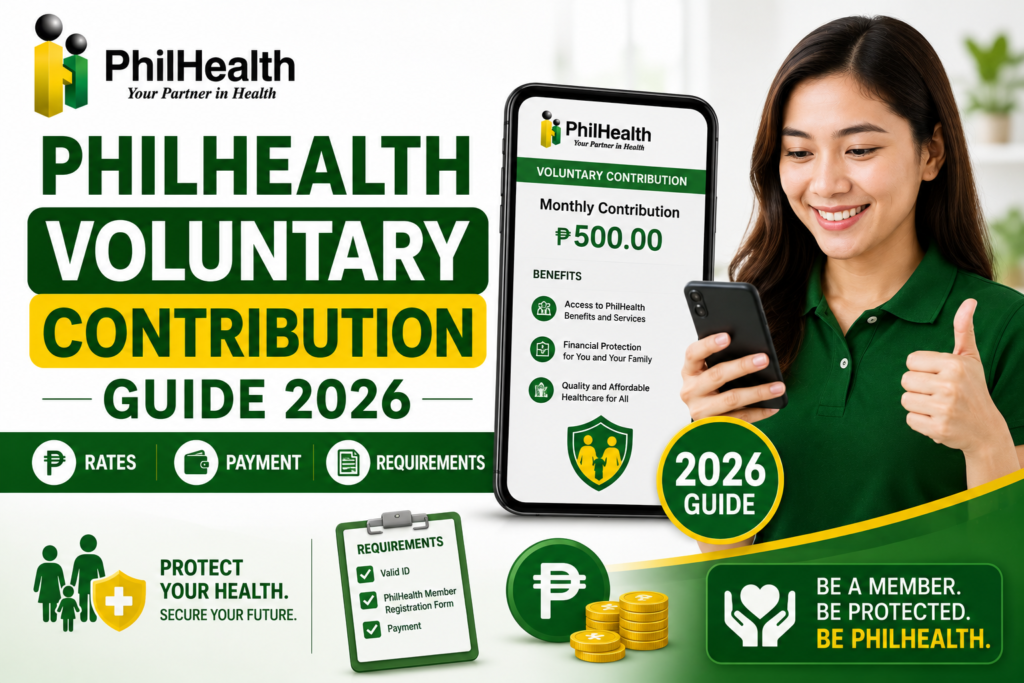
- Completed PhilHealth Member Registration Form (PMRF) with “Voluntary Member” selected.
- One valid government-issued ID — Philippine National ID, passport, UMID, driver’s license, or any accepted primary ID.
- Proof of previous PhilHealth membership (if applicable) — old MDR or PhilHealth ID card showing your PIN.
- Active email address for online account creation and verification.
Quick Registration Checklist for Voluntary Members
- ☐ Completed PMRF
- ☐ Valid government ID
- ☐ Previous PhilHealth PIN (if applicable)
- ☐ Active email address
- ☐ Know your declared monthly income for contribution computation
How to Register as a PhilHealth Voluntary Member
Step 1: Complete the PMRF
Download and fill out the PhilHealth Member Registration Form. Under membership category, select “Voluntary Member.” Fill in your personal details accurately.
Step 2: Prepare Your Documents
Have your valid government ID ready. If you previously had a PhilHealth PIN from past employment, note it on the form to link your records.
Step 3: Submit Your Registration
Submit online through the PhilHealth online registration portal or in person at any PhilHealth branch. For online submission, upload clear scanned copies of your ID.
Step 4: Receive Your PIN
Once processed, you will receive your PhilHealth Identification Number. If you already had a PIN from previous employment, that same number continues — no new PIN is issued.
How to Switch from Employed to Voluntary Membership
When you leave employment, your PhilHealth coverage does not automatically continue. You must update your membership category from “Employed” to “Voluntary Member.” To do this, log into the PhilHealth Member Portal and navigate to the membership update section. Select “Voluntary Member” as your new category. You may need to submit an update form confirming your change in employment status. If portal updating is unavailable, visit a PhilHealth branch with your valid ID and request the category change. Once updated, begin paying your PhilHealth voluntary contribution immediately — do not wait, as any gap in payments can make your status inactive and block future benefit claims.
How to Update Your Voluntary Membership Status
If your personal information changes — new address, new civil status, new contact number — update your records promptly. Log into the Member Portal and edit your profile for minor changes. For major changes like civil status or name corrections, submit update forms with supporting legal documents at a PhilHealth branch. If you later become employed or self-employed, update your category accordingly so your contributions are correctly computed.
PhilHealth Voluntary Contribution Rates
Voluntary members pay the full PhilHealth premium based on the current rate applied to their declared monthly income, within the salary floor and ceiling. The premium rate, salary floor, and salary ceiling are established by PhilHealth circulars and may be adjusted periodically. You declare your income during registration, and this declared amount determines your contribution bracket. Unlike employed members who split the premium with their employer, voluntary members shoulder 100% of the cost. For the most current rates and brackets, refer to the official PhilHealth Contribution Table.
How Voluntary Contributions Are Calculated
Your PhilHealth voluntary contribution is calculated by multiplying the current premium rate by your declared monthly income, bounded by the salary floor and ceiling. If your declared income is below the floor, the floor amount is used. If your declared income exceeds the ceiling, the ceiling amount is used. The resulting figure is your monthly premium. Multiply by the number of months you are paying for — 3 for quarterly, 6 for semi-annual, or 12 for annual payment. For example, if the premium rate is 5% and you declare ₱20,000 monthly income, your monthly contribution is ₱1,000. A quarterly payment would be ₱3,000. Always verify the current premium rate before paying.
Payment Schedules and Due Dates for Voluntary Members
- Quarterly payment: Pay every three months — typically January-March, April-June, July-September, October-December.
- Semi-annual payment: Pay every six months — January-June and July-December.
- Annual payment: Pay once for the entire year — typically at the start of the calendar year.
There is no strict penalty for paying late within a short window, but allowing your payment to lapse beyond the coverage period results in inactive status. Pay before your coverage period begins or very early in the period to ensure continuous active status.
How to Pay PhilHealth Voluntary Contributions
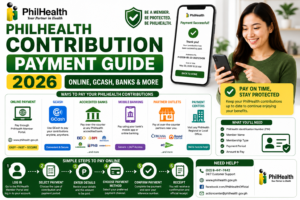
Voluntary members have multiple payment options. The most convenient is online payment through the PhilHealth Member Portal or via digital wallets like GCash and Maya. Over-the-counter payment is available at PhilHealth branches, accredited banks, Bayad Centers, and SM Bills Payment counters. For all payment methods, you need your PhilHealth PIN and the correct contribution amount. Always keep your payment receipt until the contribution appears in your contribution history.
Online Payment Options for Voluntary Contributions
| Method | How It Works | Posting Time |
|---|---|---|
| PhilHealth Member Portal | Generate SPA, pay via integrated gateways | 24-48 hours |
| GCash | Bills Payment → Government → PhilHealth | 24-48 hours |
| Maya | Bills Payment → Government → PhilHealth | 24-48 hours |
| Accredited Bank Online | Online banking with PhilHealth as biller | 3-5 working days |
Over-the-Counter Payment Options
- PhilHealth branches — pay directly at the cashier.
- Accredited banks — Landbank, DBP, and other PhilHealth partner banks.
- Bayad Centers and SM Bills Payment counters.
- Remittance centers for OFW voluntary members.
Over-the-counter payments typically take 3-7 working days to post. Always bring your PhilHealth PIN and know your exact contribution amount.
How to Check Your Voluntary Contribution History
After paying, verify your PhilHealth voluntary contribution was posted. Log into the Member Portal, go to “Contribution History,” and check that your payment appears with the correct amount and coverage period. You can also download your Member Data Record which summarizes recent contributions. If the payment does not appear after the expected posting time, contact the payment channel first, then PhilHealth with your receipt. For detailed verification guidance, see our check PhilHealth contributions guide.
What Happens If You Miss Voluntary Contributions
Missing your PhilHealth voluntary contribution payments results in inactive membership status. While inactive, you and your dependents cannot claim any PhilHealth benefits. This means if you are hospitalized during a period of lapsed payments, the PhilHealth case rate deduction will not apply to your bill. You can restore active status by paying the missed contributions for the lapsed period. Consistent quarterly payment is the best way to avoid gaps. Set calendar reminders so you never forget a payment deadline.
Can Voluntary Members Pay Contributions in Advance?
Yes. Voluntary members can pay PhilHealth voluntary contribution in advance — quarterly, semi-annually, or annually. Paying for a full year upfront ensures your membership remains active for the entire period without monthly or quarterly monitoring. Many voluntary members prefer annual payment precisely for this peace of mind. When paying in advance, specify the full coverage period clearly in your payment details. Keep the receipt and verify posting for the entire period you paid for.
How to Reactivate Inactive Voluntary Membership
Step 1: Check Your Contribution History
Log into the Member Portal and identify exactly which periods are missing payments.
Step 2: Compute the Total Due
Calculate the total amount needed to cover the lapsed periods plus the current period.
Step 3: Pay the Missed Contributions
Pay the total amount through any accredited payment channel. Specify the coverage periods you are paying for.
Step 4: Verify Reactivation
Wait for posting, then check your status on the portal. It should show “Active.” Download your updated MDR.
PhilHealth Benefits Available to Voluntary Members
Voluntary members enjoy the same full range of PhilHealth benefits as employed and self-employed members. These include inpatient hospital care with case rate deductions, outpatient services, emergency care, maternity and newborn packages, hemodialysis coverage, Z Benefits for catastrophic illnesses, primary care through Konsulta providers, and mental health services. Your qualified dependents share these benefits under your membership. The only difference is how you pay — the coverage itself is identical. For a complete discussion, visit our PhilHealth Benefits guide.
Dependents Covered Under Voluntary Membership
Your voluntary membership covers qualified dependents: legal spouse (if not employed), children under 21 (unmarried and unemployed), and parents over 60 who are financially dependent on you. Dependents must be formally declared and registered. Submit a membership update form with supporting documents — marriage certificate for spouse, birth certificate for children. Dependents share your benefits and your 45-day annual room and board limit. Ensure all dependents are listed on your Member Data Record.
Common Voluntary Contribution Mistakes to Avoid
- Assuming coverage continues after leaving employment: You must actively switch to voluntary status and start paying.
- Paying the wrong amount: Using outdated rates or wrong salary brackets results in underpayment.
- Not keeping payment receipts: Without proof, disputing missing contributions is difficult.
- Forgetting to pay quarterly: Lapsed payments cause inactive status and denied claims.
- Not checking posting status: Paying is step one; verifying PhilHealth received and posted the payment is step two.
Expert Tips for Maintaining Active Voluntary Membership
- Pay annually if possible — one payment secures 12 months of coverage and eliminates the risk of forgetting quarterly deadlines.
- Set quarterly calendar reminders on your phone for payment and contribution history checks.
- Keep a dedicated folder for all PhilHealth receipts and downloaded MDRs.
- Update your contact information promptly when anything changes — email, phone number, or address.
- Check the official PhilHealth Contribution Table annually for any rate adjustments.
- Share your updated MDR with a trusted family member who might need to facilitate hospital admissions during emergencies.
Reference Comparison Tables for Voluntary Members
Payment Frequency Options
| Payment Frequency | Months Covered | Best For |
|---|---|---|
| Quarterly | 3 months | Budget-conscious members; regular monitoring |
| Semi-Annual | 6 months | Balance of convenience and budget |
| Annual | 12 months | Maximum convenience; peace of mind |
Common Issues and Solutions
| Issue | Solution |
|---|---|
| Payment not posted | Wait 3-7 working days; check with payment channel; file inquiry with receipt |
| Status shows Inactive | Pay missed contributions for lapsed period; verify posting |
| Wrong amount paid | Pay the difference; file correction with PhilHealth |
Frequently Asked Questions About PhilHealth Voluntary Contribution
Can I become a voluntary member if I have never been employed?
Yes. You do not need prior employment history to register as a voluntary member. Students, homemakers, and anyone with financial capacity can register for the first time as a voluntary member. Simply complete the PMRF, select “Voluntary Member,” and submit with a valid ID.
How much is the PhilHealth voluntary contribution per month?
The monthly contribution is the current premium rate multiplied by your declared income, bounded by the salary floor and ceiling. Check the official PhilHealth Contribution Table for exact rates and compute based on your declared income bracket.
Can I pay PhilHealth voluntary contributions using GCash?
Yes. GCash is a popular and convenient method. For a complete walkthrough, see our pay PhilHealth using GCash guide.
What happens to my contributions if I become employed later?
Your PhilHealth PIN remains the same. Update your category to “Employed,” and your new employer takes over contribution deductions and remittances. Any voluntary contributions you already paid remain credited to your record.
Do voluntary members need to pay the same contribution as employed members?
Yes, the total premium rate is the same. However, voluntary members pay 100% of it themselves, while employed members split it with their employer. The total contribution amount computed is identical for the same declared income.
Key Takeaways
- PhilHealth voluntary contribution allows individuals without formal employment to maintain active health insurance coverage.
- Voluntary members pay the full premium themselves and can choose quarterly, semi-annual, or annual payment schedules.
- Benefits for voluntary members are identical to those of employed members — full inpatient, outpatient, maternity, and catastrophic coverage.
- Missing payments results in inactive status. Pay missed contributions promptly to reactivate and restore benefit eligibility.
- Always verify current contribution rates and policies through the official PhilHealth website at www.philhealth.gov.ph.
Image Recommendations for This Article
- Filename: philhealth-voluntary-contribution-payment-options.jpg
ALT: Voluntary member choosing between online and over-the-counter PhilHealth contribution payment methods.
Title: Voluntary Contribution Payment Options
Caption: Voluntary members can pay contributions online via GCash or the Member Portal, or over the counter at banks and payment centers. - Filename: philhealth-voluntary-member-registration-pmrf.jpg
ALT: PhilHealth Member Registration Form with Voluntary Member category selected.
Title: Voluntary Member PMRF
Caption: Select ‘Voluntary Member’ on the PMRF when registering for PhilHealth voluntary membership. - Filename: philhealth-voluntary-contribution-history-portal.jpg
ALT: PhilHealth Member Portal showing voluntary member contribution history with posted payments.
Title: Check Voluntary Contribution History
Caption: Verify your voluntary contributions are posted through the PhilHealth Member Portal.
Disclaimer
philhealth-portal.ph is an independent informational website and is not affiliated with the Philippine Health Insurance Corporation (PhilHealth) or the Philippine Government. Contribution rates, payment schedules, membership requirements, and policies may change over time. This guide provides general information based on publicly available resources. Always verify important information through official PhilHealth resources at www.philhealth.gov.ph.
Need More Help?
Explore our comprehensive PhilHealth Online Registration Guide for step-by-step instructions.
View Registration Guide →